Your cart is currently empty!
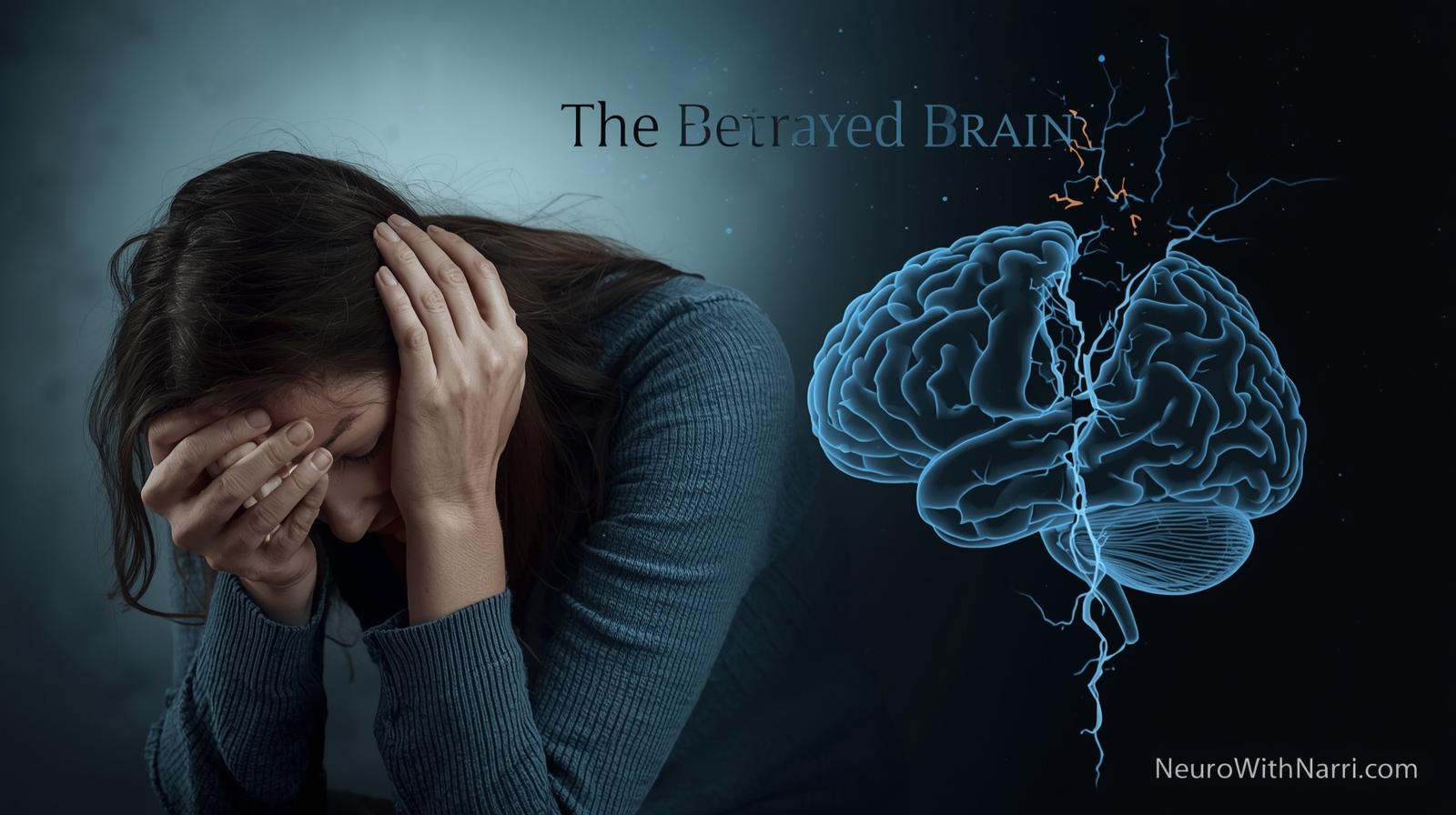
The Betrayed Brain: What Happens When You’re Cheated On
(by NeuroWithNarri.com)
Introduction
When someone you love betrays you, the pain feels physical, emotional, and psychological all at once. Your chest tightens, your thoughts race, sleep disappears, and suddenly the world feels unsafe. This is not overreaction. It is not weakness. It is the brain in shock.
Infidelity shatters one of the deepest assumptions your nervous system relies on:
“The person I love is safe.”
Once that assumption collapses, the brain responds exactly as it would to danger. This is betrayal trauma.
Understanding this response — neurologically and emotionally — helps explain why it hurts so much, why healing takes time, and why rebuilding trust feels impossible at first.
1. The Neuroscience of Betrayal Trauma
When betrayal is discovered, the brain treats it like a threat.
1.1 The Amygdala: Your Internal Alarm System
The amygdala is the brain’s fear and threat centre.
The moment you learn you’ve been cheated on, it fires instantly.
You may feel:
- panic
- trembling hands
- tightness in the chest
- sudden crying
- nausea
- overwhelming fear
This is the same neural alarm that activates in physical danger.
Your body floods with cortisol and adrenaline — the biology of survival mode.
Your reaction is not dramatic.
It is neurological.
1.2 The Pain Circuits: Why Heartbreak Feels Physical
Brain imaging shows that social pain activates the same neural pathways as physical pain — particularly the insula and the anterior cingulate cortex.
This is why betrayal feels like:
- a punch in the stomach
- a heaviness in the chest
- deep physical exhaustion
- a sense of being broken inside
Heartbreak is not a metaphor.
Your brain registers it as injury.
1.3 The Hippocampus: Trauma Memories Become “Sticky”
The hippocampus stores emotional memories.
Betrayal is one of the strongest emotional shocks the brain can experience.
As a result:
- memories become vivid
- images replay uncontrollably
- conversations repeat in your mind
- sleep becomes difficult
- small details trigger overwhelming emotion
The brain is trying to “solve” the trauma, but instead becomes trapped in loops of intrusive recall.
1.4 The Prefrontal Cortex: When Thinking Clearly Becomes Impossible
During intense emotional threat, the logical part of the brain — the prefrontal cortex — becomes less active.
You may feel:
- unable to concentrate
- indecisive
- mentally foggy
- overwhelmed by small tasks
- unable to regulate emotions
- disconnected from yourself
This is not a personality collapse.
Your brain is conserving resources for survival.
2. Why Being Cheated On Feels Like Identity Collapse
Infidelity doesn’t just break trust.
It breaks the internal narrative you lived in.
The brain relies on coherence to feel safe.
When you discover betrayal, coherence shatters.
You may question:
- Was anything real?
- Who am I to them?
- Who am I now?
- Why wasn’t I enough?
This identity shock is normal.
The brain is trying to rebuild a world that suddenly feels unfamiliar.
3. Hypervigilance: Why You Become Suspicious After Betrayal
After trauma, the nervous system becomes protective.
You might:
- check their phone
- re-read messages
- feel panic when they are late
- question every detail
- feel your stomach drop at small triggers
This is not paranoia — it is a survival response.
Your brain is trying to prevent the trauma from happening again.
4. The Breakdown of Trust and Oxytocin
Oxytocin is the hormone of bonding and safety.
It increases with affection, closeness, and intimacy.
Infidelity disrupts this system:
- The partner becomes a source of both comfort and pain.
- The oxytocin bond fractures.
- Confusion and longing intensify.
- Emotional instability increases.
This is why you may still love them deeply yet feel terrified and hurt at the same time.
The brain is trying to reconcile two contradictory realities.
5. How the Brain Heals After Betrayal
Healing from betrayal is a neurological process.
It requires time, safety, and emotional recalibration.
5.1 Calming the Amygdala
The brain must first learn that the danger is over.
You can support this by:
- grounding exercises
- deep breathing
- somatic therapy
- safe conversations
- predictable routines
- emotional support from trusted people
As safety returns, the amygdala quiets.
5.2 Processing Trauma in the Hippocampus
Trauma-informed therapy helps the brain refile and neutralize overwhelming memories.
Over time:
- intrusive thoughts lessen
- the betrayal becomes a memory, not a trigger
- emotional intensity softens
- clarity returns
Healing does not erase the event.
It removes the sting.
5.3 Restoring Prefrontal Function
As the nervous system calms, logical thinking and emotional regulation return.
You begin to:
- think clearly again
- make decisions
- see the situation with perspective
- reconnect with your identity
This stage often feels like “waking up” after weeks or months of emotional fog.
6. Can You Ever Trust Again?
The answer is yes — but trust is not rebuilt through promises.
It is rebuilt through consistent, stable, predictable behaviour over time.
Whether with the same partner or a future one, trust becomes possible again when the brain receives repeated signals of:
- safety
- honesty
- transparency
- emotional presence
- accountability
Trust is not an emotion.
It is a neurological pattern created by evidence.

7. What Healing Looks Like
Healing is not linear. You may experience:
- moments of sudden grief
- days of clarity
- waves of anger
- moments of longing
- strength you didn’t know you had
These fluctuations are normal.
The nervous system is reorganizing itself.
Over time:
- triggers fade
- self-worth restores
- safety returns
- your future becomes visible again
You do not heal because the betrayal made you stronger.
You heal because your brain, body, and heart learn to trust themselves again.
Conclusion
Being cheated on is not simply emotional pain.
It is a neurological shock that affects the entire nervous system — from fear circuits to memory, identity, and trust. But the brain is resilient. With time, support, and deliberate healing, the betrayal that once felt unbearable becomes something you can understand, integrate, and move beyond.
Your story does not end at betrayal.
It begins at rebuilding.
Other articles in this Series:

by
Tags:
Leave a Reply